Eventos
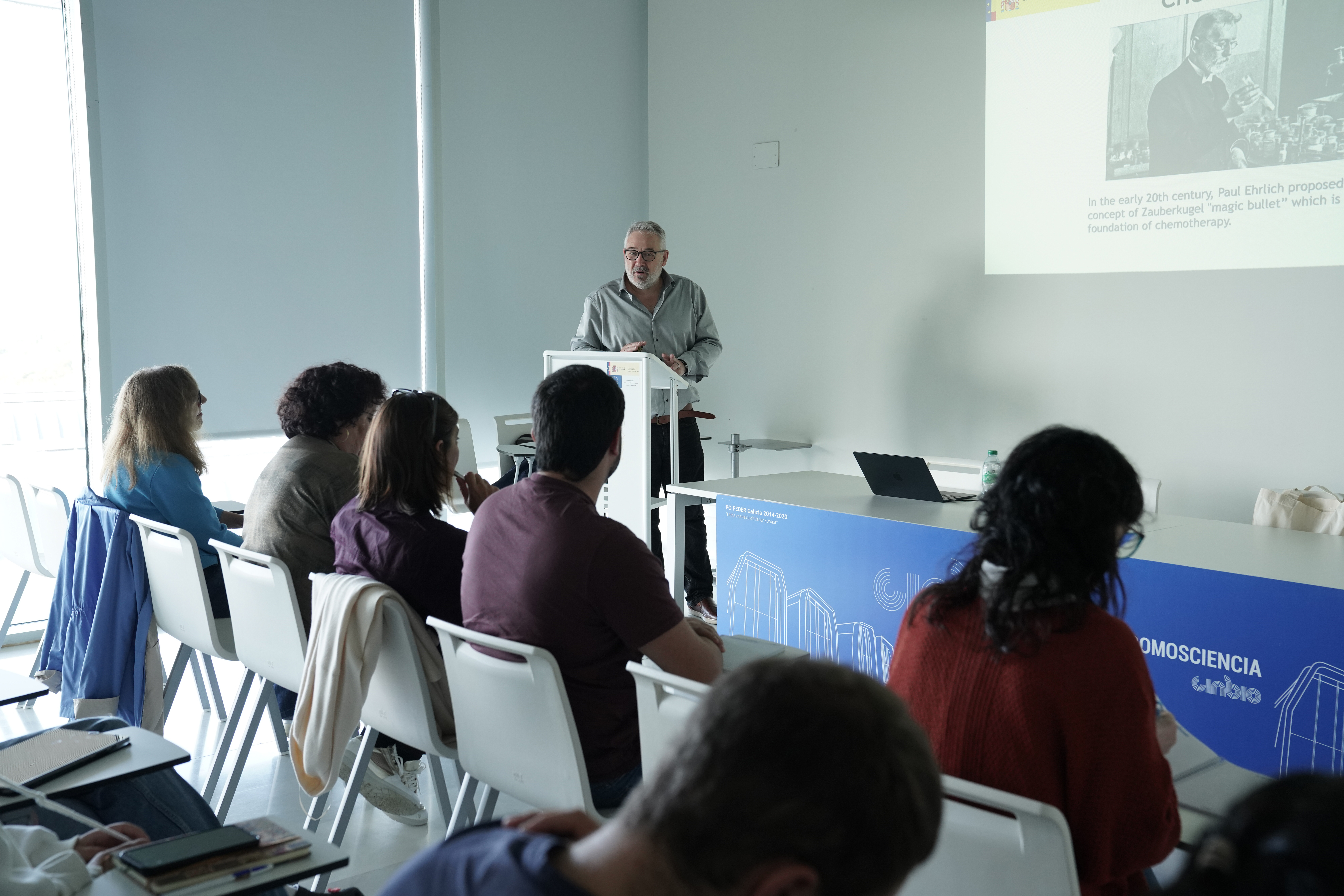
O venres 3 de outubro, José Fernando Díaz Pereira (xefe da unidade de desenvolvemento de fármacos biolóxicos, inmunolóxicos e químicos, Centro de Investigaciones Biológicas Margarita Salas, Consejo Superior de Investigaciones Científicas) ofrecerá o seminario "Tubulin targeted chemotherapy: A story of nature´s power", dentro do ciclo "CINBIO Seminar Programme".
Será ás 11:00h na Sala de seminarios de Torre CACTI.

ABSTRACT:
This presentation examines the evolution of tubulin-targeted chemotherapy as a central chapter in the history of cancer drug discovery. Beginning with Paul Ehrlich’s early 20th-century “magic bullet” concept, it follows the development of selective chemical agents from Salvarsan to modern antitumor therapies. The identification of tubulin as the binding partner of vinca alkaloids and taxanes revealed microtubules as highly effective therapeutic targets, leading to drugs that revolutionized cancer treatment. Advances in structural biology have since clarified the mechanisms of both microtubule-stabilizing and destabilizing agents, while inspiring the design of new generations of compounds. Recent innovations, including antibody-drug conjugates and optimized colchicine-site ligands, illustrate how the interplay of natural products, medicinal chemistry, and structural insight continues to yield powerful anticancer strategies.
BIO:
Fernando Díaz (Ferrol, 1965) is an Investigador Científico at the Centro de Investigaciones Biológicas Margarita Salas (CSIC, Madrid). He studied Chemistry at the Universities of Santiago de Compostela and Complutense de Madrid, where he graduated and obtained his PhD in 1993 under the supervision of Prof. José Manuel Andreu. His doctoral research was conducted jointly at the CIB Margarita Salas (CSIC, Madrid) and the Science and Engineering Research Council’s Daresbury Laboratory (UK), focusing on the structure and dynamics of tubulin. He subsequently undertook postdoctoral training and held an associate research position at the Catholic University of Leuven (Belgium) before returning to CSIC. His research centers on the structural, biochemical, and pharmacological mechanisms of tubulin and microtubule-targeting agents, with applications in cancer therapy, neurodegeneration, and virology. Over three decades, Dr. Díaz Pereira has led or participated in numerous national and European research projects, collaborated extensively with the pharmaceutical industry, and supervised multiple doctoral theses. He has authored more than 170 peer-reviewed articles (h-index >50), contributed to patents, and played a key role in elucidating the mechanisms of taxanes, epothilones, maytansinoids, and novel colchicine-site ligands. He is also engaged in science communication, bridging basic biophysics and biomedical innovation.