Andrea Visonà
CellCOM + HNG
DUALMECH – Dual Mechanical and Chemical Therapy for Bone Sarcoma
+ More info
CellCOM + HNG
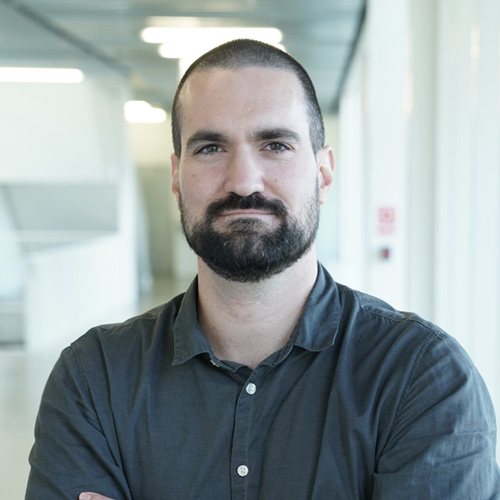
Andrea Visonà (Trento Italy, 1996) is a biophysicist specialised in nanomagnetism and mechanobiology, with a strong interdisciplinary background spanning physics, nanotechnology, and the life sciences. His work focuses on the development and use of magnetic nanoparticles as an innovative therapeutic approach to cancer, with particular attention to the mechano-mimetic aspects of in vitro models.
He obtained his bachelor's degree in physics from the Università degli Studi di Trento (2018), a Master's degree in Nanosciences and Nanotechnologies from the Université Grenoble Alpes (UGA, 2021, France), and a PhD in Nanophysics, also from UGA. Dr. Visonà has now joined CINBIO (Universidade de Vigo) as a postdoctoral fellow under the Nano4Talent MSCA COFUND programme, working jointly with Dr. Verónica Salgueiriño of the Hybrid Nanomaterials Group (HNG) and Dr. María Mayán Santos of the Cell Communication in Cancer and Age-Related Diseases (CellCOM) group.
Sarcomas are rare yet aggressive tumours with a major societal burden, and the rapidly evolving field of mechanobiology has revealed mechanosensitive pathways as promising therapeutic targets, complementary to conventional biochemical approaches.
DUALMECH aims to develop magnetic nanoparticles that act simultaneously as drug carriers and mechanical actuators in in vitro models of bone sarcoma, combining targeted drug release with mechanical triggering of cell mechanotransduction pathways to improve therapeutic efficacy.
The work will test this innovative therapeutic approach in increasingly realistic tumour models, from 2D cell cultures on hydrogels to 3D patient-derived and bioprinted models, the latter developed in collaboration with the International Iberian Nanotechnology Laboratory (INL).
Ultimately this project will lay a stronger foundation for mechano-based approaches as adjunct therapies where conventional treatments have reached their limits.
TNT + CellCOM
Dr. Rubén González is a biologist studying virus evolution and host-pathogen interactions across diverse biological systems. Integrating experimental evolution, molecular virology, and systems biology, his research addresses fundamental questions regarding how environmental factors, host genetics, and microbial communities shape infection outcomes, virus-host evolutionary transitions (from parasitism to mutualism), and the physiological consequences of viral infections on host fitness and aging.
To tackle these questions, his work leverages complementary model systems, including plants (Arabidopsis thaliana) and animals (Caenorhabditis elegans, Drosophila melanogaster, and human cell cultures).
He earned his Bachelor’s degree in Biology from the University of Vigo and a Master’s degree in Plant Molecular Biology from the Polytechnic University of Valencia. He completed his PhD at I2SysBio under the mentorship of Prof. Santiago F. Elena, investigating viral evolutionary dynamics using plant-pathogen systems.
Transitioning to animal models, he secured an EMBO Postdoctoral Fellowship at the Marie-Anne Félix Laboratory (IBENS, France) to examine how host genetics and natural microbiomes modulate C. elegans susceptibility to viral infection.
Subsequently, as a Pasteur-Roux-Cantarini Fellow in Carla Saleh’s laboratory at the Institut Pasteur (France), he established how viral infections reprogram host metabolism and drive systemic accelerated aging in Drosophila.
Currently, Dr. González is a NANO4TALENT Fellow (MSCA-COFUND) at the Center for Research in Nanomaterials and Biomedicine (CINBIO, Universidade de Vigo). Here, he is working with the groups of Miguel Correa, María Mayán, and David Posada on how to modulate viral infections using nanomaterials.
Current antiviral treatments face major limitations: narrow activity spectra, high costs, and rapid drug resistance.
To address this gap, the MEIGA project bridges evolutionary virology and nanotechnology to develop broad-spectrum antiviral strategies based on nanomaterials.
Diverse carbon and metal-based nanomaterials will be screened for antiviral treatment in tractable in vivo and in vitro models (Caenorhabditis elegans, Drosophila melanogaster, and human cells).
MEIGA aims to identify effective antiviral nanomaterials, understand their mechanisms of action, prove their cross-species efficacy, and assess the evolutionary sustainability of treatments against viral escape.
Immunology + Chilab
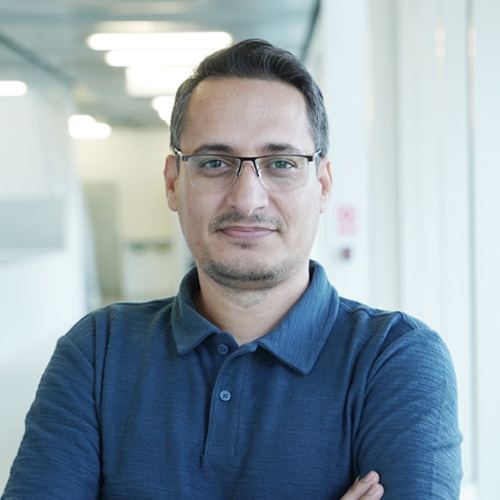
Dr. Mohammad Mahmoudian is a pharmaceutical nanotechnology researcher working at the interface of nanomedicine, RNA therapeutics, and cancer biology. His research focuses on developing advanced nanocarriers for the targeted delivery of nucleic acids and therapeutic agents, with the aim of improving the precision and effectiveness of cancer treatment.
His work combines nanomaterial engineering, drug and gene delivery, molecular biology, and preclinical cancer models.
He received his PhD in Pharmaceutical Nanotechnology from Tabriz University of Medical Sciences, Iran, following a Master’s degree in Medical Nanotechnology and a Bachelor’s degree in Radiology.
During his doctoral research, he investigated nanotechnology-based drug-delivery systems and gained international research experience as a visiting researcher at the Drug Development and Innovation Center (DDIC) at the University of Alberta, Canada.
He later moved to Italy, where he joined the Università di Torino and Istituto Nazionale Oncologico Candiolo as a postdoctoral researcher, focusing on targeted nanotherapeutic systems for KRAS-mutated tumor cells.
His research has also included cyclodextrin-based polymers for gene and drug delivery and the development of nanocarriers for therapeutic RNA and CRISPR-based applications.
Currently, Dr. Mahmoudian is a NANO4TALENT Fellow (MSCA-COFUND) at the Center for Research in Nanomaterials and Biomedicine (CINBIO), Universidade de Vigo. Working with the Immunology group led by Prof. África González Fernández and in collaboration with CINBIO's nanomaterials expertise, he is developing a targeted cyclodextrin-based polymer system for CRISPR-Cas13-mediated RNA silencing in pancreatic cancer.
His long-term goal is to establish an independent research program focused on translational RNA nanotherapeutics.
Pancreatic ductal adenocarcinoma (PDAC) is one of the most aggressive cancers and remains difficult to treat because of its late diagnosis, rapid progression, and resistance to current therapies.
The PANtgtPpoly-CAS13 project aims to develop a targeted nanomedicine platform that combines a hyper-branched cyclodextrin-based cationic polymer with CRISPR-Cas13 technology to selectively silence cancer-driving RNA molecules.
The system will be designed to deliver CRISPR-Cas13 components specifically to pancreatic cancer cells and target YAP1 and FOSL1, two molecular regulators associated with tumor progression and therapy resistance.
By combining targeted nanomaterial engineering with RNA therapeutics, the project will evaluate the system in pancreatic cancer cell models, patient-derived organoids, and preclinical xenograft models.
The ultimate goal is to establish a proof-of-concept for a targeted, non-viral RNA therapeutic platform that could contribute to the development of more precise treatments for pancreatic cancer.
Meet the researchers joining CINBIO through the NANO4TALENT programme.
CellCOM + HNG
DUALMECH – Dual Mechanical and Chemical Therapy for Bone Sarcoma
+ More info
TNT + CellCOM
MEIGA — Nanomaterials evaluation against viral infections
+ More info
Immunology + Chilab
PANtgtPpoly-CAS13 — Targeted Hyper-Branched Cyclodextrin-Based Cationic Polymer (Ppoly) System for CRISPR/Cas13-Mediated RNA Editing in Pancreatic Cancer
+ More info